
Designing an HVAC system for a high-performance home isn’t just about picking an efficient unit; it’s about understanding the physics of the architecture. For this Sudbury waterfront residence, we set out to prove that a home defined by its views—soaring 20-foot ceilings and expansive glass window walls—could maintain a “silent sanctuary” through high-performance electrification.
We engineered a fully electrified Bosch heat pump system to deliver whisper-quiet heating and cooling that matches the grand scale of the design. Because this was a live-in construction project, we used high-precision logistics to minimize our footprint, allowing the homeowners to go about their lives while we future-proofed their property value.
Why Foundation Level Engineering Matters for Waterfront Aesthetics
To keep the home’s exterior clean, we used specialized concrete coring to route primary system lines through the foundation. While it’s common for contractors to run line-hide covers up the side of a house, the homeowner didn’t want to clutter the home’s architectural silhouette. This required coring a precise access hole through 12 inches of solid reinforced concrete to keep the mechanical lines entirely concealed.
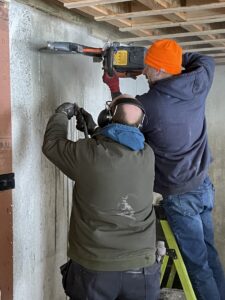 Executing these structural modifications during a 15-degree cold snap meant using diamond-tipped core drills and wet saws in sub-zero conditions. By committing to this foundation-level engineering despite the weather, we ensured the system followed the most efficient internal path while preserving the million-dollar aesthetic of the waterfront property.
Solving Structural Clearance Issues for Custom Heat Pump Installations
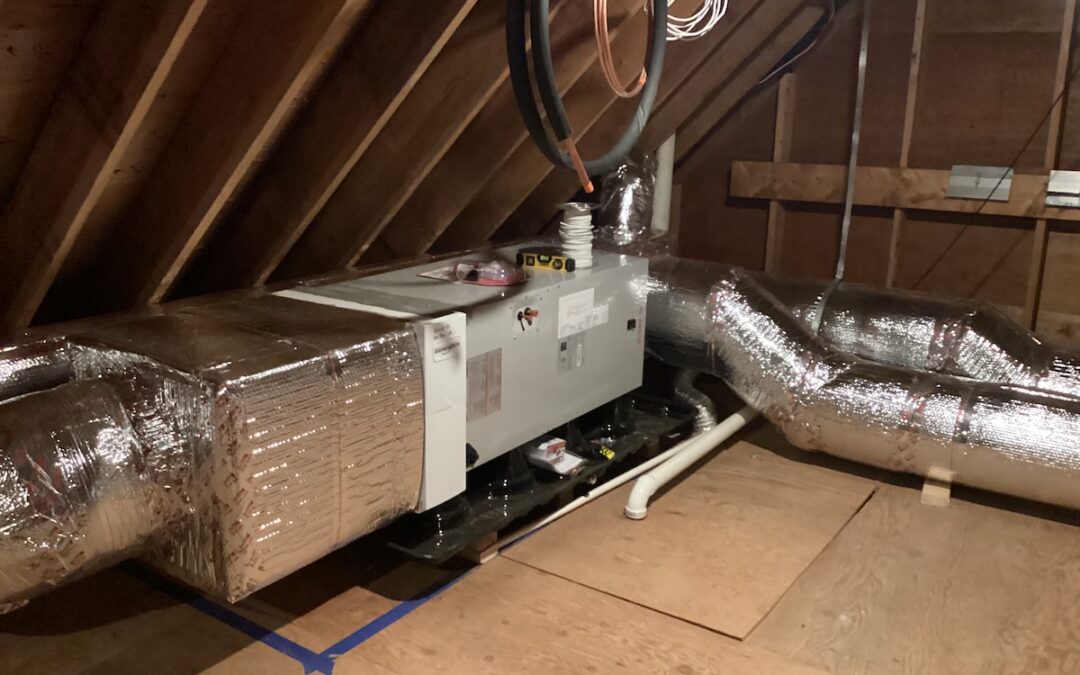
In high-end additions, we often run into restricted structural clearances that standard equipment just won’t fit into. During this install, the team hit a narrow access point between two distinct attic spaces. To complete the run without cutting into the finished sheetrock, we modified a specialized drill on-site, removing the handle to shave exactly one inch off its length. It’s that level of on-the-fly engineering that separates a clean install from a messy workaround.
We also prioritized the family’s daily comfort by installing specialized adapters. These allow the high-efficiency Bosch heat pump to be controlled by the original thermostats the family has used for 30 years. By removing the tech fatigue of a complex new interface, the residents got all the benefits of an upgrade with zero learning curve.
Coordinating the HVAC Timeline for New Construction and Additions
The secret to a perfect system is getting in as soon as the framing is complete and the structure is weatherproofed. There is a critical window where the roof and windows are on, but the plumber and electrician haven’t occupied the joist bays yet.
In premium construction, 20-inch rigid ductwork is the least flexible element in the house. By securing these paths early, we prevented the awkward bulkheads and drop-downs that often ruin ceiling heights. This proactive coordination allowed us to layout supply registers with mathematical precision for rooms that weren’t even physically defined yet, ensuring the finished home felt as open and airy as the original blueprints intended.
Reclaiming Usable Space in the Attic and Garage
We reclaimed valuable square footage by reorienting mechanical components to follow the perimeter of the home rather than bisecting usable space. In the Sudbury attic, we engineered a custom wrap-around ductwork layout that runs tightly behind the air handler unit. By pushing the infrastructure to the edges, we preserved the majority of the attic floor for the homeowner’s storage.
We applied this same logic to the garage by relocating the project’s water heater into a dedicated mechanical closet. This move allowed the homeowners to reclaim significant space in their two-car garage, providing the room necessary for modern needs like an EV charging station or a home workshop.
Planning a New Addition to Your Home?
Your architectural vision deserves a climate system that is felt, but not seen. We provide the engineering expertise to integrate high-efficiency comfort that preserves your views and your peace of mind.
Sudbury Heat Pump FAQ and Expert Design Advice
Why choose a Bosch heat pump for a large addition?
Bosch systems utilize inverter technology, meaning they don’t just blast “on” or “off.” They ramp up and down slowly, which is essential for maintaining a consistent temperature in homes with high ceilings and large windows. They are also among the quietest units on the market.
Does a whole-home heat pump qualify for Mass Save rebates in 2026?
Yes, if you are building a new addition or converting a whole home to electric, you can qualify for the $8,500 Mass Save rebate. We help our customers navigate the 2026 requirements, including the necessary weatherization checks and equipment standards.
Is it better to hide HVAC lines or run them outside?
Whenever possible, we recommend internal routing. While running lines on the exterior is faster and cheaper, it exposes the copper and electrical components to the elements and can be an eyesore. Internal routing through the foundation or attic protects your investment and your home’s curb appeal.