
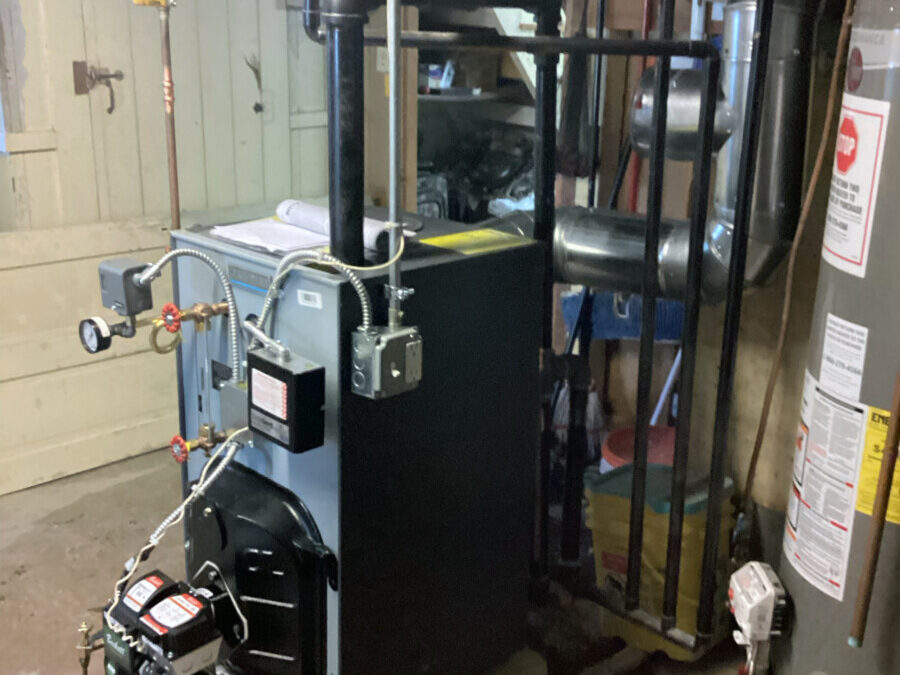
Identifying a Cracked Boiler Block and Why it Ends the Repair vs Replace Debate
In the heating industry, a “5-degree week” is the ultimate stress test for New England infrastructure. We recently took an emergency call from a homeowner in Millbury whose 27-year-old steam boiler had finally hit its limit. It wasn’t just a part failure; the cast iron block had suffered a catastrophic crack. Water was actively pooling across the basement floor, and with a polar vortex settling in, the house was losing heat fast.
At Turkey Heating & Cooling, we don’t push replacements if a repair makes sense. But when a block is breached, you’re throwing good money after bad. We sat down with the family, looked at the 27-year history of the unit, and made the call for a full system upgrade. It was the only way to move from “emergency mode” back to guaranteed home safety.
Heavy Duty HVAC Engineering to Break Corrosion Welded Unions in Millbury
Replacing a three-decade-old steam system is a gritty, physical job. Years of low-pressure steam and mineral buildup create something called corrosion welding. The heavy-duty threaded connectors—or “unions”—effectively fuse together over time.
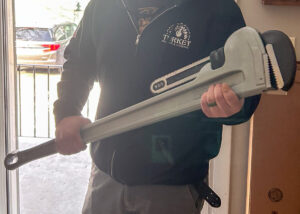 To break these loose without snapping the home’s permanent iron pipes, we had to break out the 4-foot aluminum pipe wrench. We call it the “Big Wrench” for a reason. It takes a specific mix of brute force and surgical leverage to dismantle a legacy system in a cramped Millbury basement. If you don’t have the right tools and the experience to handle 30 years of rust, a simple swap can quickly turn into a plumbing nightmare.
Why the Hartford Loop is Mandatory for Steam Boiler Safety in New England
Steam is a historic technology that requires a deep respect for physics. A major part of this installation involved repiping the Hartford Loop. This piping configuration has been a safety standard since 1903, but you’d be surprised how often it’s done incorrectly.
The Hartford Loop acts like a mechanical insurance policy. It ensures that even if a leak develops elsewhere in the house, the water inside the boiler can’t drop below a safe level. This prevents “dry firing,” which is the leading cause of boiler explosions and cracked blocks. We don’t skip these steps; we pipe them to last another 30 years.
Achieving Real Steam Boiler Reliability and Winter Peace of Mind
- Rapid Response: Despite the seized pipes and heavy cast iron, we had the old unit out and the new American-made boiler fired up in 5.5 hours.
- The Sight Glass Habit: Steam is a hands-on system. We walked the client through how to check that vertical glass tube every few days, which is the best way to prevent safety shutdowns.
The Final Result: The homeowner traded a leaking, 27-year-old liability for a high-efficiency system with a fresh 30-year life expectancy.
Is your home ready for the next deep freeze?
Don’t wait for a basement flood to evaluate your heating logic. We provide the technical grit and straightforward advice needed to keep homes in Central Massachusetts warm and safe.
Steam Boiler FAQ and Expert Advice for Central MA Homeowners
How often should I check my steam boiler’s water level?
During the peak of a Massachusetts winter, you should check your sight glass every 1–2 days. Steam boilers “consume” water as they work. If the level drops too low, the low-water cutoff will kill the power to the burner, leaving you without heat until it’s refilled.
What is the average lifespan of a cast iron steam boiler?
If you keep the water clean and get an annual tune-up, 25 to 30 years is standard. However, once the cast iron block cracks, the system is officially “end of life.”
How long does an emergency boiler replacement take?
Most residential swaps take a full day. In this case study, our team’s familiarity with legacy piping allowed us to complete the extraction and install in just 5.5 hours.
What causes a boiler block to crack?
The most common causes are “thermal shock” (adding cold water to a hot, dry boiler) or simple age and corrosion. Regular maintenance catches the leaks that lead to these failures before they become emergencies.