
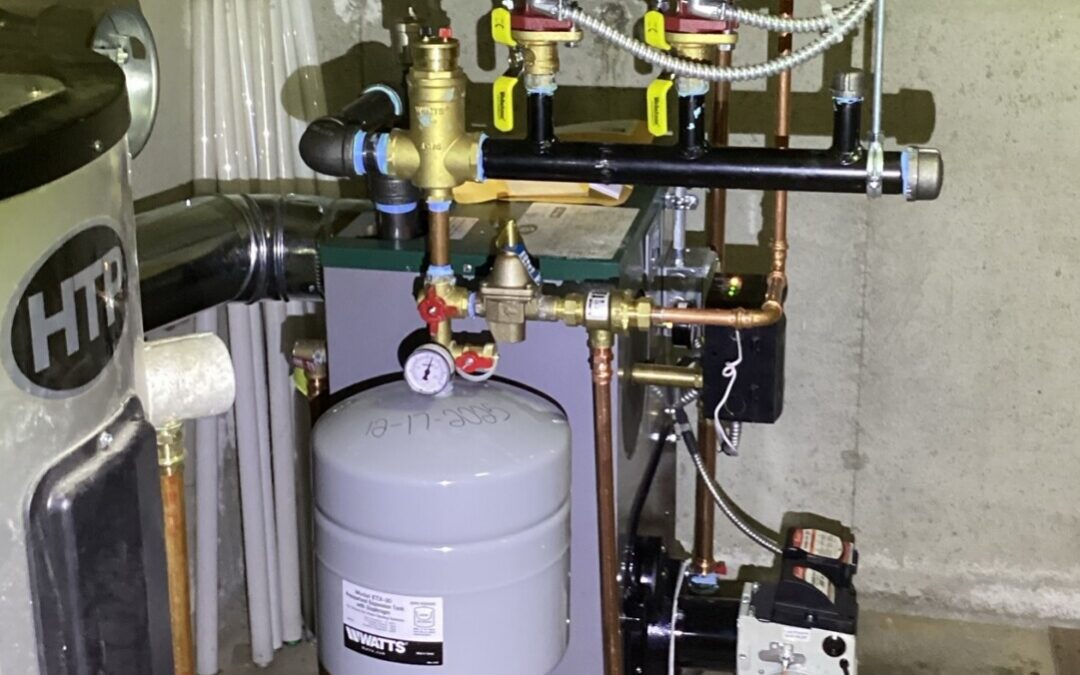
When a 40-year-old boiler fails in the middle of a New England winter, the first question on a homeowner’s mind isn’t just how to fix it—it’s whether that system even belongs in the house anymore.
We recently helped a family in Shrewsbury navigate this exact crossroads. Faced with an aging system that had finally reached its limit after four decades of service, we provided a side-by-side comparison between the cost of an expensive emergency repair and the long-term value of a modern upgrade. Ultimately, the homeowner chose to trade the uncertainty of a legacy unit for the guaranteed comfort and safety of a new, high-efficiency system.
At Turkey Heating & Cooling, we don’t believe in just swapping boxes. When we step into your home, we’re looking at the big picture—how the unit breathes, how it’s being controlled, and what the rest of the system looks like. We know that every family’s budget and situation is different, so we start by giving you the facts. If your boiler’s core is still in good shape and a repair makes sense, we’ll tell you. Our goal isn’t to push a sale; it’s to make sure that whatever path you choose, your heat stays on and your home stays safe.
Identifying Critical Signs and Safety Indicators of Boiler Failure
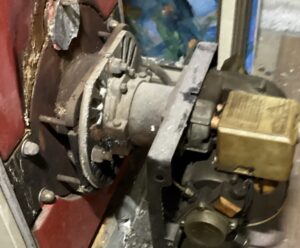
Visible corrosion and rust were one of the first signs that this 40-year-old Italian-made triple-pass boiler may be at the end of its service life.
The initial call for this property came in during a January cold snap when the boiler simply stopped firing. While the immediate culprit was a failed safety controller, our deeper inspection revealed that the system was showing signs of wear that a simple part replacement wouldn’t solve.
We found significant soot accumulation on the front of the unit—a classic red flag that the system is struggling to draft properly. We also discovered a non-functional pressure gauge and an expansion tank that had reached the end of its life. Identifying these “invisible” signs of fatigue is a vital part of a professional safety check. A boiler that isn’t breathing correctly or lacks functional safety controls isn’t just inefficient; it’s a reliability risk when you need it most. We made sure the homeowner saw these issues firsthand so they could understand the true health of their heating system.
Comparing Modern Upgrades and Legacy Systems for Shrewsbury Homeowners
Interestingly, the boiler we removed was no ordinary unit. It was an Italian-made triple-pass boiler, a design that was way ahead of its time 40 years ago. In a triple-pass system, the heat from the burner travels through the unit three separate times, allowing the water to soak up as much energy as possible before the air exits through the chimney.
It was a high-end model— the “Cadillac” of its era— but even the best engineering has a lifespan. After 40 years, the electronics had failed and the internal soot build-up was becoming a safety concern. Instead of trying to find rare parts for an aging imported unit, we transitioned the home to a modern American workhorse. We chose the new system because it is a reliable, high-efficiency boiler, and is designed to be easily serviced by local technicians for decades to come.
Achieving Real Boiler Replacement Results and Long Term Benefits
By the end of the day, the transformation in the Shrewsbury basement was about more than just new steel and copper. It was about removing the guesswork from the home’s comfort. While the old 40-year-old system was a testament to how long a well-built boiler can last, the new high-efficiency system provides something the old one no longer could: certainty.
The homeowners can now head into the heart of winter knowing they have a system that is safer, quieter, and significantly cheaper to run. At Turkey Heating & Cooling, we take pride in helping our neighbors navigate these big decisions with clear facts and long-term thinking. Whether we’re performing a repair to get you through the season or engineering a full system upgrade, our priority is always a home that works exactly the way it should.
Facing a tough choice with your heating system?
At Turkey Heating & Cooling, we don’t just sell equipment; we provide the engineering and straightforward advice you need to make the best decision for your family.
Boiler Replacement FAQ and Expert HVAC Advice for Homeowners
When is a boiler repair no longer technically viable?
A boiler is generally worth fixing as long as the main cast iron block remains intact and leak-free. However, if the cost of repairs on an aging unit approaches a significant fraction of a new system’s cost, the long-term reliability and fuel savings of a replacement often become the more cost-effective choice.
What are the common signs of an aging boiler system?
Homeowners should monitor for red flags such as soot accumulation on the exterior of the unit, visible rust, or gauges that are no longer functioning. These indicators suggest the system is struggling to maintain efficiency or safety, and a professional evaluation is recommended to prevent a total breakdown during a cold snap.
How do I choose between a heat pump and a new oil boiler?
The right choice depends on your home’s specific layout, your budget, and your long-term comfort goals. Heat pumps offer high efficiency and zero on-site combustion, while high-efficiency boilers are reliable, familiar workhorses. We provide the technical data for both options so you can make an informed decision.
Is a triple-pass boiler more efficient than other models?
Older boilers often allow too much heat to escape through the chimney. A triple-pass design forces the heat to travel through the unit three times, giving the water more time to absorb that energy, which directly reduces your overall fuel consumption.